
Blog · 2026-11-13
Fiberglass vs. Cellulose vs. Mineral Wool: The Honest Material Guide
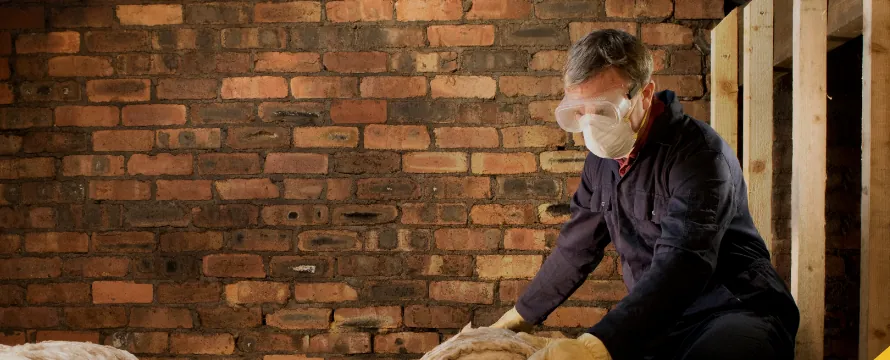
Homeowners shop insulation by brand name, but brands matter far less than families. Nearly every residential product you will be quoted belongs to one of three: fiberglass, cellulose or mineral wool. Each insulates well when installed well. They differ in how they behave around fire, water, sound, pests and time — and those differences, matched to your house, should drive the choice.
Fiberglass: the familiar default
Spun glass fibers, sold as batts for framed cavities and as loose-fill for blowing. R-value runs about R-3.2 to R-3.8 per inch blown, higher in dense batts. Fiberglass does not absorb water (though it loses performance while wet and dries slowly in a closed cavity), does not feed mold, and is the lowest-cost path to a given R-value in most attics. Its weakness is air: fiberglass filters air rather than stopping it, which is why it underperforms its label in leaky assemblies unless the air sealing is done first. Our fiberglass batt insulation work is mostly walls and floors; in attics we usually blow it.
Cellulose: the dense, recycled contender
Shredded, treated paper fiber, almost always blown. Around R-3.6 to R-3.8 per inch, and noticeably denser than blown fiberglass — that density slows air movement through the material itself, quieting both drafts and sound. The borate treatment resists pests and smoldering. Cellulose settles somewhat after installation, which honest installers compensate for by blowing to a settled-depth specification. It absorbs water more readily than fiberglass, so it is a poor choice anywhere moisture is unresolved. In a dry attic it is an excellent, often slightly cheaper path to high R-value.
Mineral wool: the overachiever
Rock or slag spun into fiber, sold mainly as dense batts. Around R-4 to R-4.3 per inch, and the personality differences are real: it is effectively fireproof at household temperatures, hydrophobic (it sheds water rather than drinking it), an outstanding sound absorber, and dense enough to stay put in a wall for a century. Its costs are literal — it is the most expensive of the three per unit of R — and practical: cutting and fitting it is slower work. We reach for it in rim joists, party walls, around flues where clearances allow, and anywhere fire or water behavior matters more than price.
So which one belongs in your attic?
For most Maryland attics, the contest is blown fiberglass versus blown cellulose, and the deciding factors are budget, the attic's leak profile and your feelings about recycled content — performance at equal settled R-value is close. Mineral wool earns its premium in specific places rather than whole attics. And all three lose to a fourth factor: installation quality. A careful R-38 beats a sloppy R-49 every season of the year. Our blown-in insulation assessments quote the material that suits your attic, with the reasoning in writing — call (855) 640-0404 and ask us to show our work.
Want us to look at your attic?
Book a free assessment — depth measured, leaks photographed, options in writing.