
Blog · 2026-11-13
Crawl Space Insulation: The Floor Above Your Head Nobody Thinks About
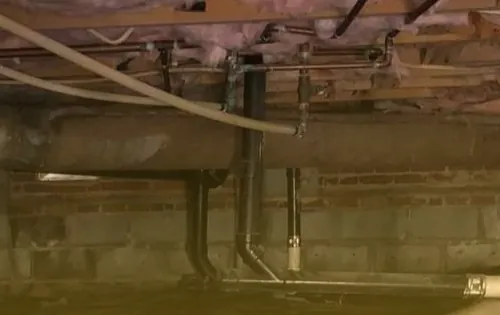
The crawl space is the least visited and hardest working part of many Maryland homes. Everything you dislike about the floor above it — the January chill underfoot, the summer mustiness, the pipes you worry about on the coldest night of the year — is the crawl space talking. Insulating it properly is one of the highest-comfort, lowest-glamour upgrades a home can get, and doing it wrong is worse than not doing it at all.
Why the crawl space matters so much
Your home breathes from the bottom. A large share of the air in your living space started in the crawl space and rose through it — the same stack effect that pulls attic leaks upward. Whatever is down there (cold, moisture, musty air) is on its way up. Meanwhile the floor assembly is a giant heat exchanger: warm room air above, outdoor-temperature air below, and in an uninsulated crawl, almost nothing between them but subfloor and hope.
The two strategies: ceiling or walls
The older approach insulates the crawl space ceiling — batts held between the floor joists. Done well, with the material tight to the subfloor and every pipe run considered, it works. Done typically, it sags, gaps at the joists, and leaves plumbing exposed to freezing air. The modern approach insulates the foundation walls and seals the vents, bringing the crawl space inside the home's thermal boundary. Ducts and pipes now live in semi-conditioned space, floors warm up, and moisture becomes far easier to control. Our crawl space and basement insulation work starts with an honest look at which strategy your house, your drainage and your duct layout actually suit — because each home argues for its own answer.
Moisture first, always
No insulation decision outranks water. Standing water, a missing or torn vapor barrier, and downspouts dumping at the foundation will defeat any material we install and feed the mold that gives crawl spaces their smell. The correct sequence is: fix bulk water, lay or repair the ground vapor barrier, then insulate. Any quote that skips straight to material without a moisture conversation is a quote to decline.
Materials we reach for down there
Rigid foam board on the walls gives continuous coverage that joist-bay batts cannot match. Closed-cell spray foam insulation seals and insulates rim joists — the leakiest band of the whole house — in one pass. Batts remain a reasonable budget choice in a dry, vented crawl with the joists to hold them properly. What we will not do is stuff fiberglass against a damp foundation wall and call it finished.
The comfort dividend
Homeowners in Columbia and across Howard County tell us the same thing a month after the work: the floors feel different, the musty note is gone, and the furnace cycles less. That is the crawl space, finally on your side. If your floors are cold and your crawl is a place you avoid thinking about, start with a look — call (855) 640-0404 and we will photograph what we find and lay out the options in writing.
Want us to look at your attic?
Book a free assessment — depth measured, leaks photographed, options in writing.